The Personal Time Log, Before the Planner App
A personal time log turns a vague sense of busyness into a clearer account of your day, helping you reflect on attention without judging yourself.

A personal time log can show where an ordinary day actually goes before a planner app tells you where it ought to go. A sheet of paper and a few brief notes are enough to make the passing hours easier to remember, without turning the record into a scorecard.
The idea is modest: note what you were doing as the day unfolds, then look back with curiosity. A log is not a productivity system or a verdict on your choices. Its value lies in the small gap it creates between what you assumed about your time and what you can recall about it.
What is a personal time log?
A personal time log is a private record of activities and transitions across a chosen stretch of the day. It might say “answered messages,” “made lunch,” “walked to the store,” or “sat with a book,” with rough time markers if those help.
Unlike a calendar, which usually records intended appointments, a log records what you remember actually doing. Unlike a task list, it can include maintenance, pauses, interruptions, and unplanned moments rather than only tasks that can be checked off.
The record can be loose. Some people write a short note after an activity; others make a few marks at natural breaks, such as after a meal or before leaving work. The aim is to make the day more visible, not to capture every movement.
Why did people record how time passed?
People have long kept records to make an elusive part of daily life easier to examine. Diaries, household accounts, work records, and personal notes all preserve different details of how days are spent. A time log belongs to that broader habit of observing ordinary life, though it need not be formal or intended for anyone else.
Modern planners and apps can turn time into blocks, reminders, and reports. A paper log starts somewhere quieter: with the person noticing, in plain language, what held their attention. That distinction matters because a record can be useful before it becomes a plan.
Writing “talked with my neighbor” is not the same as labeling the conversation productive or wasteful. The first preserves an event; the second attaches a judgment. A private log can keep the observation while leaving the interpretation open until you are ready to consider it.
How can a paper log prompt reflection without judgment?
Use descriptions that answer “What was happening?” rather than “Was this worthwhile?” Neutral notes are easier to revisit because they do not force you to defend the day or criticize yourself for it.
For example, write “opened the laptop to reply to one message, then read several unrelated pages” instead of “wasted the afternoon online.” The first note captures a sequence you can reflect on; the second turns a behavior into a label and may discourage honest recording.
When you review the page, look for questions rather than scores. Did a particular transition make it hard to return to a task? Did an unplanned conversation feel welcome? Was there a moment when you wanted quiet but did not make room for it? You do not need to treat every pattern as a problem to solve.
Say you notice that you often write “quick errand” and later realize the trip also included a friendly conversation and a stop at the library. That fuller account may help you see the outing as a meaningful part of the day, not a delay to subtract from it. The entry does not prove anything; it gives you a more accurate starting point for reflection.
What should you write down in a personal time log?
Record enough to recognize the shape of the day later. A phrase is usually more helpful than a bare label: “prepared dinner and cleaned the counter” carries more context than “home.” Include time markers only if they help you remember sequence or duration; rough references such as “after lunch” can be sufficient.
Depending on what you want to notice, an entry might include:
- Activity: the main thing you were doing, in neutral words.
- Transition: a move between places, tasks, or kinds of attention.
- Interruption: what pulled you away, if you can recall it.
- Context: where you were or who was involved, when that changes the meaning.
- Personal note: a brief observation such as “needed a quieter room” or “enjoyed this.”
These are options, not fields you must complete. If every entry becomes a form to fill out, the log can start to feel like another obligation. Keep only the details that help you understand your own day.
How long should you keep the log?
Keep it for a period that feels manageable, then pause and decide whether continuing would serve a purpose. A short stretch can be enough to reveal what you had forgotten about your days; there is no need to turn an initial curiosity into permanent tracking.
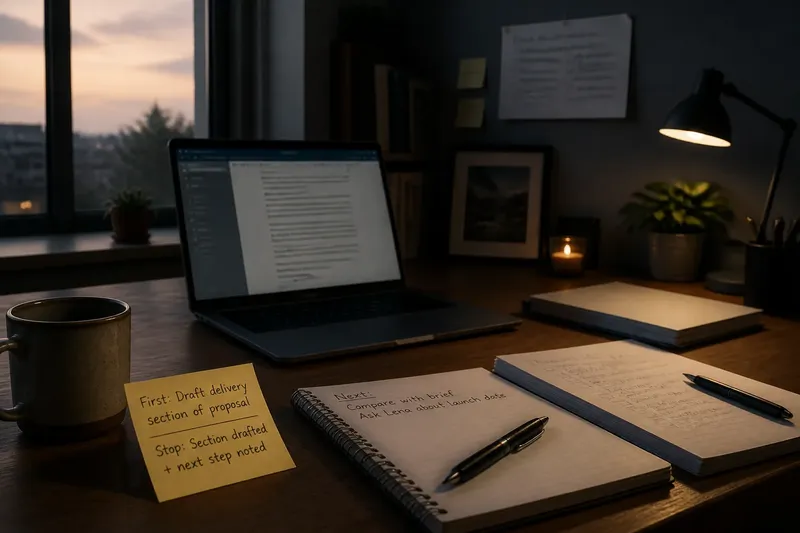
Choose a simple method you can reach easily. A pocket notebook, a page in a journal, or a folded sheet on your desk can work. If you prefer a digital note, use it as a plain record rather than adding timers, categories, or reminders you do not need.
Make entries at moments that already occur: after a meeting, when you put away groceries, or when you close a book. If you miss a stretch, leave it blank or add a broad recollection later. Guessing at detail can make the record look more exact than your memory allows.
How is a time log different from a planner or time tracker?
A planner is generally for arranging what you intend to do; a time log is for noticing what happened. A time-tracking tool may emphasize duration, categories, or reports, while a reflective paper log can preserve the texture and context of an activity without turning it into a metric.
Those tools can coexist, but they answer different questions. A calendar can tell you that a meeting was scheduled. A log might capture that the meeting ended with an idea you wanted to revisit, or that switching back to focused work took attention you had not expected to spend.
Choose the lightest tool that fits your purpose. If your question is “What commitments have I made?”, a calendar is likely more useful. If it is “What do I remember about the way this day unfolded?”, a few handwritten notes may be enough.
What questions should you ask when you review the page?
What surprised me about the day?
Notice an activity, interruption, or pause you had not expected to see in the record. Surprise is a prompt to look closer, not a reason to declare the day successful or unsuccessful.
Which moments felt connected to what matters to me?
Look for entries that carried a sense of care, curiosity, rest, responsibility, or connection. Your answer may include ordinary activities that would not appear on a task list.
Where did my attention go without a clear choice?
Identify a transition or interruption that seemed to pull you along. You might decide to change something, or simply keep the observation for now.
What would I like to remember about this day?
Choose a detail that deserves to remain visible, even if it was not planned or completed. This question lets the log preserve meaning as well as activity.
When should you stop recording?
Stop or simplify if writing starts to make you monitor yourself instead of notice your day. A log that encourages self-criticism, constant clock-checking, or pressure to account for every pause is no longer serving the reflective purpose.
You can also stop when you have answered the question that led you to begin. Perhaps you wanted to understand why evenings felt crowded, or whether your week contained time for a particular commitment. Keep the page private, and share it only if you choose; it is a record for your own attention, not a report card.
The personal time log works best as a small invitation to look again. Before reaching for a planner app, write down one ordinary stretch of the day in words you can recognize later. That simple record can help you decide what deserves attention next, while leaving the day itself free of a grade.